
What a data scientist does at work
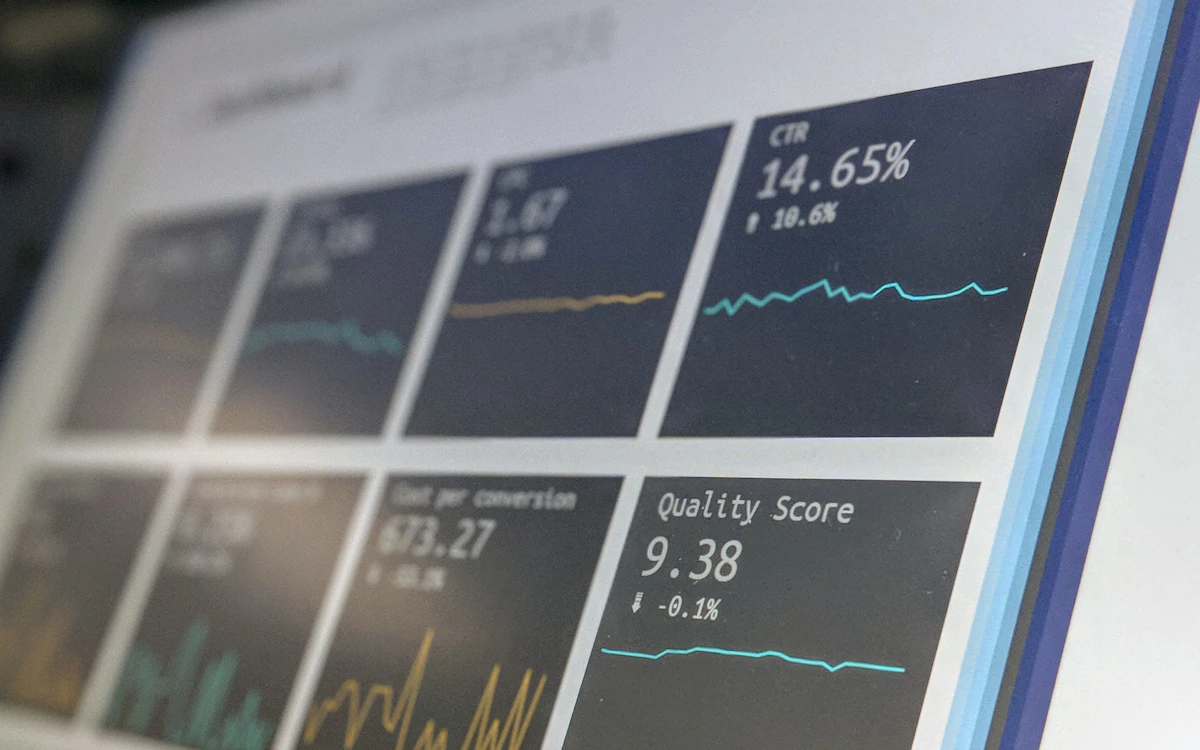
Ask ten working data scientists what they did yesterday and most will not say "trained a neural network". They will say they pulled data with SQL, fixed a column full of missing values, argued about which metric matters, or explained a chart to someone in sales. The glamorous modelling step is a small slice of a much larger job.
In plain terms, a data scientist takes a business question, finds or builds the data needed to answer it, uses statistics and machine learning to look for the answer, and then communicates it clearly enough that someone can act on it. Sometimes the answer is a dashboard. Sometimes it is a prediction model running behind an app.
Why Hyderabad graduates are choosing data science
Almost every company now collects data, from a small retailer's billing system to a large product firm's app logs. Somebody has to turn that raw material into decisions, and that is why roles such as Data Analyst, Junior Data Scientist and BI Analyst keep appearing on job boards in Madhapur and across India.
The field also rewards people from many backgrounds. Engineering, science, commerce and even non-technical graduates move into it, because the entry ticket is demonstrable skill rather than one specific degree. That is encouraging, but it also means you are competing on proof, not on paper.
Seven steps to become a data scientist
Follow the sequence below. Skipping ahead to machine learning before the earlier steps are solid is the most common reason beginners get stuck.
Learn the maths behind data science
Learn descriptive statistics, probability, distributions, hypothesis testing and a little linear algebra and calculus. You do not need to become a mathematician, but you should understand what a confidence interval or a gradient means.
Learn Python for data science
Get comfortable with data structures, functions, file handling and then NumPy and Pandas. Work inside Jupyter Notebook and VS Code so the tools feel familiar before you face real datasets.
Get comfortable with SQL and data cleaning
Practise SELECT, JOIN, GROUP BY and subqueries, then deal with missing values, duplicates and outliers. Most real projects spend more time here than anywhere else.
Explore and visualise data in your projects
Learn to profile a dataset, spot patterns and anomalies, and present findings with Matplotlib, Seaborn and Plotly. Add Power BI or Tableau so you can also build dashboards for business audiences.
Study core machine learning for data science
Study regression, classification, clustering, evaluation metrics, cross-validation and overfitting using Scikit-learn. Focus on choosing the right metric and explaining why, not only on getting a high score.
Deploy at least one data science model
Wrap a trained model in a Flask or FastAPI service, or a Streamlit app, and learn the basics of Docker and cloud hosting. A deployed model shows you understand the full lifecycle.
Prepare your data scientist resume and apply
Turn your projects into a resume, a tidy GitHub profile and a clear LinkedIn page, practise interviews, and apply for entry roles such as Data Analyst or Junior Data Scientist.
Who should start learning data science
Data science suits curious, patient people who enjoy working things out. It is less suited to anyone hoping for a shortcut.
Final-year students curious about data science
You have time to build a portfolio before graduation, which is a real advantage. Start with maths and Python now and you can show projects by the time placement season arrives.
Support and testing professionals moving into data science
You already know how businesses run, and that context is valuable in analytics. Expect to study in evenings and weekends, and be realistic that a switch takes months of steady effort.
Non-technical graduates interested in data science
Data science is reachable, but plan for a longer ramp on mathematics and programming. A guided path with labs helps a lot because you get feedback instead of guessing.
People who dislike data cleaning and debugging
Think twice. Cleaning data and fixing broken code is a daily reality, and if that sounds miserable, a different route in tech may suit you better.
Modules in the Skill IT data science course
The Advanced Data Science Certification Program is built as eight modules across 180 hours of hands-on curriculum.
- Mathematics for Data Science: statistics, probability, hypothesis testing and calculus for ML, using NumPy and SciPy
- Python Programming: data structures, OOP basics, NumPy and Pandas
- Data Wrangling with SQL and cleaning: joins, subqueries, outliers, feature engineering basics, MySQL or PostgreSQL and OpenRefine
- Exploratory Data Analysis: univariate, bivariate and multivariate analysis, profiling and communicating early insights
- Data Visualization with Matplotlib and Seaborn, plus interactive charts in Plotly
- Business Intelligence Tools: dashboards in Power BI with DAX basics and in Tableau
- Machine Learning Fundamentals: regression, KNN, Decision Trees, Random Forest, K-Means and model evaluation
- Model Deployment: Pickle or Joblib, Flask, FastAPI, Streamlit, Docker and AWS or Azure basics
What to expect after learning data science
Outcomes depend on effort, portfolio quality and the market, so treat these as possibilities rather than promises.
- Entry roles such as Data Analyst, Junior Data Scientist, BI Analyst, Data Science Associate and Reporting Analyst
- Deployment-leaning roles such as Applied Data Scientist or entry-level ML and MLOps Engineer
- Indicative entry-to-mid salaries in India of roughly ₹4L to ₹10L per year for Data Analyst, Junior Data Scientist and BI Analyst roles, varying widely by company, city and skills
- A minimum of five documented portfolio projects, including an end-to-end capstone
- Readiness to prepare for certifications such as the IBM Data Science Professional Certificate or the Google Data Analytics Professional Certificate
How Skill IT Education teaches data science
Learning alone is possible, but a structured route saves months of guessing what to study next.
Hands-on data science modules
Each module builds on the last and closes with a lab or a real project, so you write code and analyse data instead of watching slides.
Data science labs on untidy datasets
Labs use real, untidy datasets, which is closer to what a data team hands you on day one.
Data science projects and profile help
Your projects are documented to professional standards, and we help you turn them into a resume, GitHub profile and LinkedIn page.
Two-month data science internship
After four months of structured learning, the internship gives you exposure to data analysis, dashboarding and model deployment work.
Hiring-partner introductions for data science
You get resume reviews, mock interviews and access to a hiring-partner network, all aimed at helping you prepare rather than promising a particular result.
Take your first step toward data science
Nobody becomes a data scientist in a weekend, but nobody needs to already be one to begin. Pick the first module, open a notebook this week, and let each finished project make the next one easier.