
Threat Intelligence Analyst
Course in Hyderabad
A role-focused path through the SOC Analyst Certification Program
This role course arranges the SOC Analyst programme around threat intelligence, the work of turning information about attackers into something a SOC can use. You start with how attacks work, then the CTI lifecycle and frameworks, the indicators that feed detection, and how the SOC acts on intelligence.
- CTI lifecycle
- IOC and IOA
- MITRE ATT&CK
- Cyber Kill Chain
- Open-source research
- Phishing analysis
- Malicious IP checks
- Email header analysis
Same duration and fees as the SOC Analyst programme.
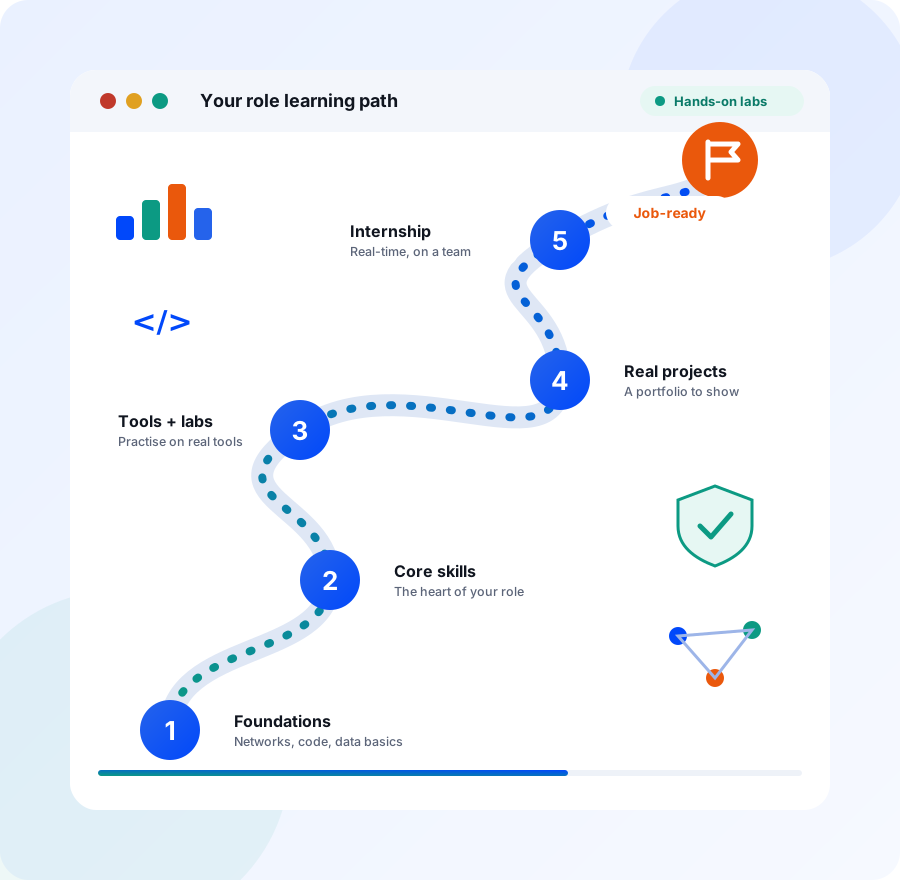
What a Threat Intelligence Analyst does
A threat intelligence analyst collects, checks and explains information about the people and techniques that attack organisations. In a SOC, the output is practical: a list of indicators to watch for, a note on how an attacker group works, a warning about a phishing campaign. You answer the question of who might attack us, how, and what to look for, and then make sure the monitoring team can act on the answer.
Week to week, you read threat reports and feeds, pick out what applies to your organisation, and turn it into indicators and short briefings. You check suspicious IP addresses, domains and email headers, map behaviour to MITRE ATT&CK and the Kill Chain, and pass useful indicators to the SIEM team. Follow-up matters too: you learn from incidents and hunts which intelligence was useful, and adjust what you collect.
Threat intelligence analysts work in SOCs and security teams at banks, IT services companies, healthcare and retail organisations, and at managed security providers. Some teams have a dedicated intelligence group, while at smaller ones an experienced analyst does it alongside other work. It matters because attackers often reuse techniques, and knowing them in advance lets a SOC detect and contain an attack sooner.
What you will be able to do
- Explain the stages of the cyber threat intelligence lifecycle and what each one produces.
- Tell indicators of compromise from indicators of attack and explain when each is useful.
- Map an attack to the Cyber Kill Chain and MITRE ATT&CK with evidence for each stage.
- Use open-source search techniques, including Google Dorks, to find exposed information.
- Analyse phishing emails and headers to trace where a message really came from.
- Analyse malicious IP communication in a SIEM and record what it suggests about the attacker.
- Feed indicators into SIEM reference sets so that detection improves.
- Write a clear intelligence note that helps hunters and analysts act.
Who this course is for
Final-year student
You like reading, researching and connecting facts, which suits intelligence work. Expect to build SOC basics first: this path starts with how attacks work before it turns to intelligence itself.
IT support engineer
You already research odd problems and explain them to non-technical users. Add attacker knowledge, indicator handling and MITRE ATT&CK, and you can turn that habit into useful intelligence notes.
Non-IT graduate
Writers, researchers and analysts from other fields bring useful habits. The programme still opens with networking and operating system basics for everyone, and you need them to read indicators sensibly.
Working SOC analyst
You see the same indicators in alerts again and again. This path shows how to look upstream, work out where indicators come from and turn what you see into shared intelligence.
What you will learn as a Threat Intelligence Analyst
These are the SOC Analyst programme modules that matter most for this role, in the order that suits it. Every topic, tool and lab below is part of the programme syllabus.
The Cyber Threat Landscape
Module 2 · 30 HrsIntelligence starts with knowing how attacks work. Study threats, vulnerabilities and risk, the five phases of hacking, malware, phishing and password attacks, so a report about a campaign makes sense and you can judge which parts matter.
See the full module →What you study
- Threat, vulnerability & risk — how they connect
- The five phases of hacking: recon to clearing tracks
- Malware types: viruses, worms, trojans & ransomware
- Phishing, spear-phishing & business email compromise
- Password attacks, MITM, DoS & DDoS attacks
Tools you use
WiresharkNmapHands-on lab
Analyse simulated phishing emails and identify social engineering red flags.
Incident Response & Threat Hunting
Module 5 · 50 HrsThis is the centre of the role. Work through the CTI lifecycle, IOC versus IOA, the Kill Chain and ATT&CK, and practise open-source research and email header analysis. Use the hunting project to see how intelligence directs a search.
See the full module →What you study
- The Cyber Kill Chain and MITRE ATT&CK framework
- Cyber Threat Intelligence (CTI) and its lifecycle
- Indicators of Compromise (IOC) vs. Indicators of Attack
- Threat hunting methods & investigation tools
- Email header analysis & malware analysis basics
Tools you use
MITRE ATT&CKIOC / IOAKill ChainGoogle DorksCyberChefHands-on project
Threat Hunting Project. Use MITRE ATT&CK and threat intelligence feeds to proactively hunt for hidden threats.
SIEM Platforms & Security Monitoring
Module 4 · 50 HrsIntelligence has value only when the SIEM can use it. Learn reference sets and use-case creation, malicious IP and phishing analysis and log source integration, so indicators you find become detections that analysts see.
See the full module →What you study
- SIEM architecture, event & flow collectors
- Malicious IP communication & phishing analysis
- Windows, Linux & security device log types
- Reference sets, use-case creation & rule tuning
- Log source integration across the enterprise
Tools you use
IBM QRadarSplunkFirewall LogsProxy LogsHands-on lab
Analyse malicious IP communication and phishing activity using live SIEM offense data.
Inside a Security Operations Center
Module 3 · 30 HrsUnderstand who uses your work. This module shows SOC functions, roles and the tools around the SIEM, so you can write intelligence for L1 analysts, hunters and responders in the form each of them needs.
See the full module →What you study
- What a SOC does, and why it matters
- Key SOC functions: triage, investigation & hunting
- Key SOC roles and responsibilities
- Modern-day SOCs: people, process & technology
- Cyber security monitoring essentials
Tools you use
SIEMSOAREDR / XDRHands-on lab
Walk a sample alert through the Tier 1 to Tier 2 to Tier 3 escalation path.
What the programme covers for this role. The programme teaches the intelligence lifecycle, indicators, ATT&CK and open-source research at a junior level. Commercial intelligence platforms and dark web research are outside its syllabus.
Where a Threat Intelligence Analyst course can take you
SOC Analyst (L1) or Junior Security Analyst
Intelligence roles usually build on time in the SOC. Starting as SOC Analyst (L1) or Junior Security Analyst lets you see how alerts, indicators and real attacks connect before you specialise.
SOC Analyst (L2)
At L2 you investigate and enrich alerts with outside information, which is close to intelligence work. It is also where many analysts discover whether they prefer research or response.
Threat Intelligence Analyst (Junior)
The final module lists this title as a target role, within the Incident & Threat Response track. You collect and check intelligence, and pass it to the SOC as indicators and short notes.
Longer-term paths
Over time, intelligence analysts can move toward Junior Threat Hunter or Incident Response Analyst work, or to SOC Team Lead and Security Architect. Those steps depend on experience and further study.
Certifications the programme prepares you for
- CompTIA CySA+
- EC-Council Certified SOC Analyst (CSA)
- CompTIA Security+
Threat Intelligence Analyst course, quick answers
What does a threat intelligence analyst do?
They gather and check information about attackers, their techniques and their tools, and turn it into something the SOC can use, such as indicators to watch for or a note on a phishing campaign. The aim is to help the team detect and contain attacks sooner.
Can a fresher become a threat intelligence analyst?
Junior roles exist, and the programme lists Threat Intelligence Analyst (Junior) as a target. Most people first spend time on the SOC queue, where they see real indicators. Your project work on hunting and phishing analysis helps show what you can do.
What is the difference between IOC and IOA?
An indicator of compromise is evidence that something bad has already happened, such as a known malicious address. An indicator of attack points to attacker behaviour in progress. The response and hunting module covers both, and you practise using each to guide investigations.
How is threat intelligence different from threat hunting?
Intelligence produces knowledge about attackers, such as their techniques and indicators. Hunting uses that knowledge to search the network for signs of them. The two work closely together, and this programme teaches both in the same module, with a hunting project as practice.
Which tools does a threat intelligence analyst use in this course?
You work with MITRE ATT&CK, the Kill Chain and IOC and IOA concepts, plus CyberChef for decoding data and Google Dorks for open-source research. In the SIEM module, QRadar and Splunk show how indicators become reference sets and detections.
Get the Threat Intelligence Analyst Course Fee Structure & Syllabus
Share your details and our admissions team will call you back with the full syllabus, batch timings and fee breakdown.
Read before you decide
Other roles in the SOC Analyst programme
Part of the Advanced SOC Analyst Certification Program
Every role course follows the same SOC Analyst programme, with the same modules, labs, projects and internship. See the full syllabus and every module.