
Security Analyst
Course in Hyderabad
A role-focused path through the Cyber Security Certification Program
This role course arranges the Cyber Security programme around the work of a security analyst. It focuses on understanding networks and endpoints, finding and prioritising vulnerabilities, reading alerts and logs, and reporting clearly, with enough attack knowledge to know what you are defending against.
- Network fundamentals
- OpenVAS scanning
- CVSS prioritisation
- SIEM alert triage
- Wireshark analysis
- Phishing detection
- Endpoint hardening
- Security reporting
Same duration and fees as the Cyber Security programme.
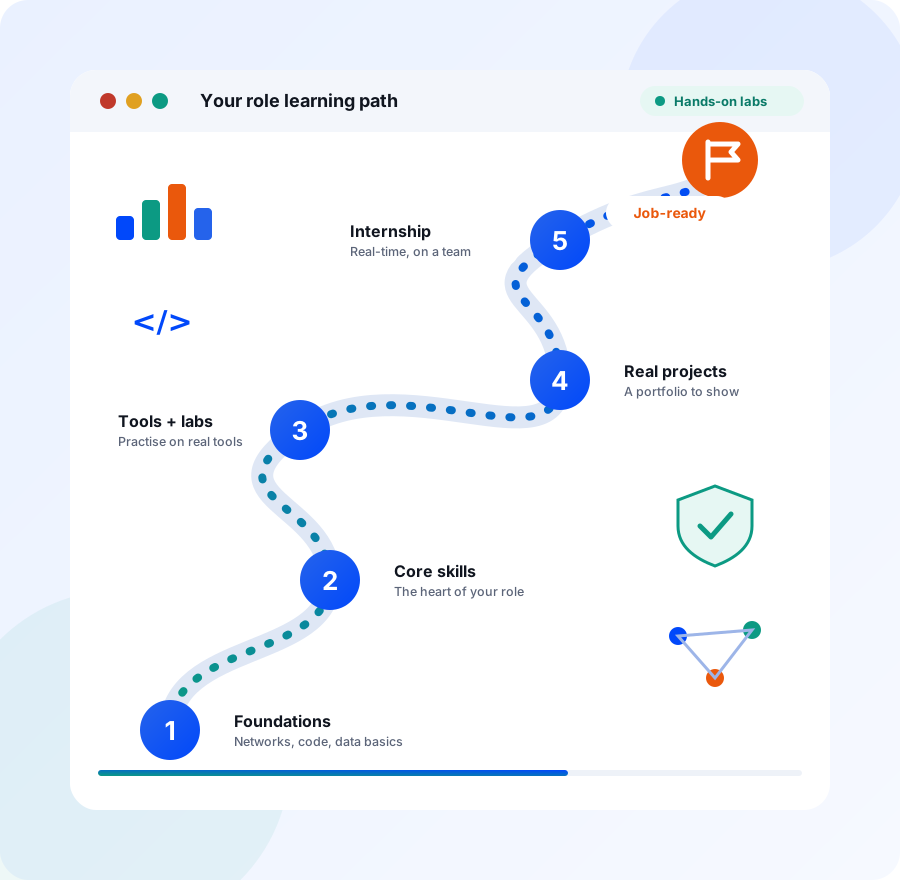
What a Security Analyst does
A security analyst protects an organisation's systems from day to day rather than attacking them. You watch for warning signs, check which weaknesses matter most, keep systems configured safely, and make sure the business follows its own security rules. The job sits between the technical teams who run the systems and the managers who need to understand the risk, so clear explanation counts as much as technical skill.
A normal week mixes routine and surprises. Some days you run a vulnerability scan, sort the results by severity, chase the teams who own the affected servers and update a tracker. Other days a suspicious email or an odd alert takes over, and you check logs and packets to decide whether it is a real problem. Reports and policy reviews fill the gaps between.
Security analysts are needed almost anywhere that runs its own IT, including banks, hospitals, software and services companies, telecom and retail businesses, and the consulting firms that support them. Data protection rules and customer audits mean most organisations need someone who can show that weaknesses are found and fixed on time. That makes the role a common first step into security and a solid base for specialist work later.
What you will be able to do
- Explain how networks and protocols work, and spot traffic that does not belong.
- Run OpenVAS and Nessus scans and prioritise the results using CVSS and business impact.
- Triage alerts in a SIEM environment and decide what needs escalation.
- Recognise phishing and social engineering attempts and describe the controls that reduce them.
- Harden Windows and Linux endpoints and clean up a host after a malware infection.
- Draft a security policy mapped to a named compliance framework.
- Build a vulnerability prioritisation dashboard and present a remediation plan.
- Write an executive summary that a non-technical manager can read in minutes.
Who this course is for
Recent graduate wanting an entry role
You want a clear first job title in security. This route builds the everyday skills of the analyst, which are networks, scanning, alerts and reports, so your first interviews are about things you have practised.
IT support or helpdesk engineer
You already handle user accounts, patches and troubleshooting, which is much of the ground an analyst covers. The course adds scanning, log analysis and the security thinking that turns those tasks into security work.
Network or system administrator
You know your firewalls, servers and permissions well. Here you add vulnerability management, alert handling and policy work, so you can move from keeping systems running to keeping them safe.
Non-IT graduate or career switcher
Start with networks and the command line in the first module and build up steadily. The analyst path leans on reading, checking and explaining, which suits people who are careful and methodical.
What you will learn as a Security Analyst
These are the Cyber Security programme modules that matter most for this role, in the order that suits it. Every topic, tool and lab below is part of the programme syllabus.
Cybersecurity & Ethical Hacking Foundations
Module 1 · 20 HrsNetworking, operating systems and policy are the daily language of an analyst. Concentrate on the OSI model, the TCP/IP stack, the Linux and Windows command lines, the CIA triad and compliance, since you will use all of them every week.
See the full module →What you study
- The CIA Triad and the core principles that every security control is designed to protect
- Networking fundamentals — the OSI model, the TCP/IP stack, ports and protocols
- 3-way and 2-way TCP handshakes, and the role of core networking devices
- Linux command-line essentials for security practitioners
- Windows command-line essentials and baseline system administration
- Cyber laws, compliance obligations and organisational security policy basics
Tools you use
Linux/Windows CLIKali LinuxVirtualBoxHands-on lab
Capture a live TCP handshake and map observed traffic back to the OSI model.
Reconnaissance, Scanning & Enumeration
Module 2 · 30 HrsVulnerability management is a core analyst duty. Learn to run scans, read CVE, CVSS and CWE records, use the NVD database, and document findings in a format that other teams can act on.
See the full module →What you study
- Port scanning fundamentals and advanced scanning techniques (SYN, stealth, UDP)
- Vulnerability assessment using automated scanning tools
- Reading and scoring vulnerability records with CVE, CVSS and CWE
- Using the NIST and NVD vulnerability databases inside an assessment
- Building an attack-surface map from reconnaissance data
- Documenting reconnaissance findings in a client-ready format
Tools you use
OpenVASNmapKali LinuxHands-on lab
Run an automated vulnerability scan with OpenVAS and triage results by CVSS score.
AI-Powered Security Operations & Cyber Defense
Module 6 · 20 HrsThe module closest to daily analyst work. Spend time on SIEM basics, alert triage, phishing detection, CVSS-based prioritisation and threat intelligence, and on writing the report that closes each piece of work.
See the full module →What you study
- SIEM fundamentals — log collection, correlation and alerting
- Phishing detection and email security using AI-assisted controls
- Vulnerability classification and CVSS-based prioritisation
- Threat intelligence fundamentals and intelligence-led defence
- Professional security reporting and executive documentation
- Building and maintaining a vulnerability prioritisation dashboard
Tools you use
SIEM & Log PlatformsNessusOpenVASWiresharkHands-on lab
Triage and investigate alerts inside a simulated SOC/SIEM environment.
System Hacking, Malware & Social Engineering
Module 3 · 30 HrsKnowing how machines get compromised makes you a better defender. Focus on malware types, packet analysis, anti-malware controls, endpoint hardening and remediation, and how to document an incident properly.
See the full module →What you study
- Malware concepts, classification and types — virus, worm, trojan, ransomware, rootkit
- Packet analysis and network traffic inspection
- Anti-malware software, detection techniques and defensive controls
- Social engineering concepts and the attack lifecycle
- Types of social engineering — phishing, pretexting, baiting and tailgating
- Endpoint hardening and malware remediation basics
- Incident documentation for system-compromise scenarios
Tools you use
WiresharkOpenVASKali LinuxHands-on lab
Deploy and test anti-malware defensive controls on a compromised host.
Penetration Testing & Web Exploitation
Module 4 · 60 HrsYou do not need to be a full penetration tester, but you should understand the attacks you defend against. Focus on firewalls, the OWASP Top 10, web and session attacks, and how professional reports are structured.
See the full module →What you study
- Firewall configuration and wireless encryption standards
- Session hijacking concepts and cookie-based attacks
- IDS, IPS, firewall and honeypot evasion techniques
- The OWASP Top 10 web application vulnerabilities
- End-to-end penetration testing methodology and rules of engagement
- Professional penetration test reporting standards
Tools you use
WiresharkOWASP ZAPNiktoBurp SuiteHands-on project
Web Application Security Audit (OWASP Top 10). A full application-layer assessment mapped against the OWASP Top 10, with remediation guidance.
Where a Security Analyst course can take you
Junior Security Analyst or IT Security Analyst
These are the usual entry titles. You handle scans, alerts, policy checks and reports while a senior colleague reviews your work, and you build a record of finished tasks you can talk about in interviews.
Security Analyst
With experience you own vulnerability management for a set of systems, decide priorities, work directly with system owners, and take part in incident handling and audits.
Threat intelligence, vulnerability or compliance roles
Analysts often specialise as a Threat Intelligence Analyst, a Vulnerability Assessor or a Security Compliance Analyst, depending on whether they prefer research, technical assessment or policy and audit work.
Longer term
Over the years the path can lead to Security Consultant or Network Security Engineer roles, and towards AI-driven work such as Threat Detection Engineer for those who enjoy building detections.
Certifications the programme prepares you for
- CompTIA Security+
- ISC2 Certified in Cybersecurity (CC)
- Microsoft Security Operations Analyst
Security Analyst course, quick answers
Is a security analyst the same as a cyber security analyst?
The two names are used loosely, and job adverts often treat them as one role covering monitoring, vulnerability management, policy and reporting. Scope varies by company, so read the listed duties rather than the title before you apply or prepare.
Do I need to code to be a security analyst?
Not to get started. The syllabus works through the Linux and Windows command lines and security tools rather than programming. Simple scripting helps you automate repeated checks later, but it is not a barrier to a first analyst role.
What is the difference between vulnerability scanning and penetration testing?
A scan runs automatically and lists known weaknesses. A penetration test goes further and tries to use them to show real impact. Analysts usually run the scans and rank the results with CVSS, while testers prove the worst ones can be exploited.
Which is better for a fresher, security analyst or penetration tester?
It depends on what you enjoy. Analysts spend more time on monitoring, scanning and reporting, testers on hands-on attacks. The early modules of the programme are shared, so you can try both sides before you choose where to focus.
Which certifications help a security analyst?
CompTIA Security+, ISC2 Certified in Cybersecurity and Microsoft Security Operations Analyst are on the programme's list. The curriculum is structured to help prepare you for them, and Security+ or ISC2 CC are common starting points.
Get the Security Analyst Course Fee Structure & Syllabus
Share your details and our admissions team will call you back with the full syllabus, batch timings and fee breakdown.
Read before you decide
Other roles in the Cyber Security programme
Part of the Advanced Cyber Security Certification Program
Every role course follows the same Cyber Security programme, with the same modules, labs, projects and internship. See the full syllabus and every module.